

How Yes's Davison found the Moody Blues at home
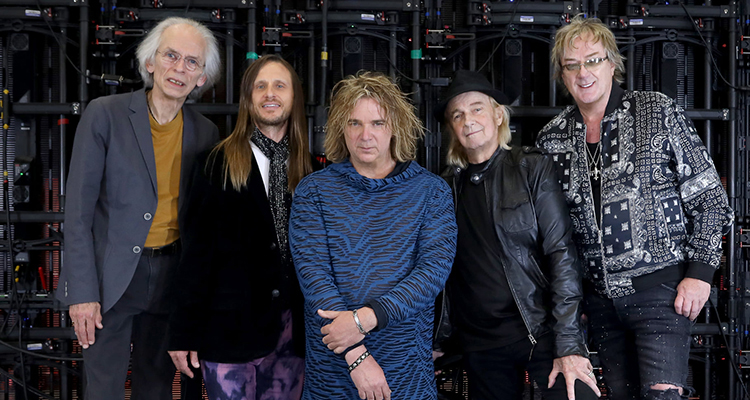
In an interview published on 10 October, the frontman traced a path from a 1986 Rush gig through more than a decade with Yes to a 2019 marriage that opened another English progressive catalogue.
Yes vocalist Jon Davison has described how he first encountered the Moody Blues only after marrying into the band. An interview published on 10 October 2026 set out the sequence plainly: a meeting on the 2019 Cruise To The Edge, a move to England, marriage that same year to Emily, the daughter of John Lodge of the Moody Blues, and only then a real engagement with that catalogue.Davison has been the lead singer of Yes since 2012. The English progressive rock band remain an active heritage act with him at the front, still carrying a name long tied for many listeners to Owner of a Lonely Heart and to the wider progressive tradition. His own route into that tradition, as he told it, began earlier and elsewhere, and the Moody Blues arrived by a path few would invent for a working prog singer.
Rush first, then Yes
Before Yes, and long before any link to the Moody Blues, there was Rush. Davison named Exit Stage Left among his earliest progressive rock purchases. His first prog gig was a Rush show in 1986. In the interview he spoke of his admiration for Rush and for Yes, touched on his favourite Yes albums, and ranged across other prog influences that had mattered to him as a listener and as a singer.
That listening history now sits behind more than a decade with Yes. He joined in 2012 and has remained the band's vocalist while the group has continued to work as a heritage draw. The conversation did not turn on a new release or a change of line-up. It turned on how another English progressive catalogue entered his life through family rather than through the record racks, and on the patience required at home when the talk turns to the music.
Meeting on Cruise To The Edge
The hinge was the 2019 Cruise To The Edge. There he met Emily Lodge. He moved to England to be with her after that meeting, and they married in 2019. Only after the marriage, he said, did he properly encounter the Moody Blues — the band to which her father, John Lodge, belongs.
It is an unusual path into a catalogue that many progressive listeners meet in adolescence. Davison's account places the discovery in adult life and inside a marriage, not in a first flush of fandom. He also described his wife as patient when progressive rock topics come up at home, and noted that she is not a fan of either Yes or the Moody Blues. The detail lands against the grain of any neat story about a ready-made prog household: the singer is steeped in the music; the household, on his telling, is not.
For an audience that knows Yes on stage and on record, the conversation sketches a map of progressive rock as Davison has lived it — from a Rush gig in 1986 and an early live album, through a lasting place in Yes from 2012, and then, by marriage in 2019, into the orbit of the Moody Blues. He expressed clear admiration for that band as well as for Rush and for the records that first drew him in.
Nothing in the interview announced a joint appearance, a tribute project or a shared bill. What it offered was a personal account of how two English progressive names, Yes and the Moody Blues, came to sit in the same life: one through the work of singing with the band, the other through a family connection formed on a prog cruise and sealed by a wedding. Yes continue with Davison as lead singer. The Moody Blues link, on his own evidence, remains a matter of listening, family and regard rather than of a formal collaboration.
That is where the story stands after the interview of 10 October: a frontman still in place with a heritage act, open about the records that formed him and about the unexpected route by which another progressive band joined his world.
Tour dates
MAY 2027
2 – Sheffield, Sheffield City Hall Oval Hall
3 – Manchester, Bridgewater Hall
6 – Birmingham, Symphony Hall
7 – Bristol, Bristol Beacon
10 – London, The London Palladium
11 – London, The London Palladium
13 – Glasgow, Glasgow Royal Concert Hall
15 – York, York Barbican
16 – Liverpool, Liverpool Philharmonic Hall