The former Police frontman also warns that the technology threatens the labour economy far beyond songwriting, as The Last Ship readies its West End run.
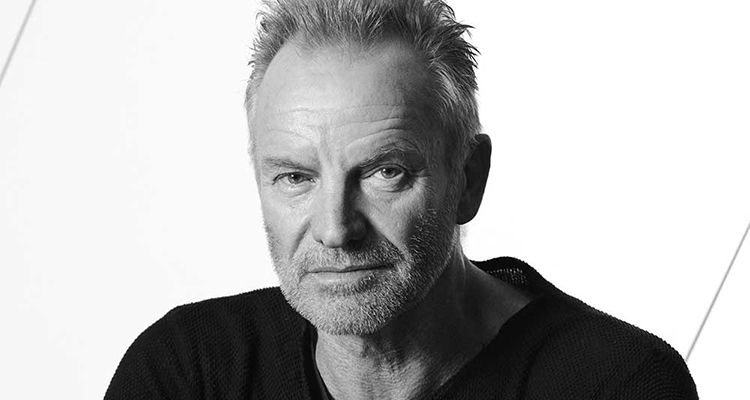
Sting has said he does not feel any competition from artificial intelligence in songwriting. On 20 September 2026, he appeared on Sunday With Laura Kuenssberg and drew a hard line between music that merely fills a room and a song that carries a life.
While AI can produce serviceable pop music suitable for railway stations or hotel lobbies, he argued, it lacks lived human experience. "AI has never had its heart broken, it doesn’t have a story, it has a borrowed story, so you’re not really hearing a song," he said. He added that audiences still seek live performances by vulnerable human beings who can make mistakes rather than perfect machines.
He also warned of a "danger right now with AI potentially destroying the labour economy" and noted that "we’re all in that danger." The remarks came as his musical The Last Ship prepared to open in the West End the following week.
From The Police to four decades alone
Gordon Matthew Thomas Sumner, known as Sting, was the frontman, songwriter and bassist for The Police from 1977 until the band's break-up in 1986. Formed in London, the group settled within months on the line-up of Sting, guitarist Andy Summers and drummer Stewart Copeland — a trio that remained unchanged for the rest of the band's history. Emerging from the British new wave scene, they played a style of rock shaped by punk, reggae and jazz, and became globally popular in the late 1970s and the early to mid-1980s.
That run of studio albums still anchors the catalogue: Outlandos D'Amour in 1978, Reggatta De Blanc in 1979, Zenyatta Mondatta in 1980 and Ghost in the Machine in 1981, with later editions including the 2024 Synchronicity Super Deluxe Edition. Live recordings such as Certifiable, recorded in Buenos Aires, and the 1995 set Live! keep the stage side of the work in circulation.
Sting launched a solo career in 1985 with The Dream of the Blue Turtles and has drawn on rock, jazz, reggae, classical, new-age and worldbeat ever since. Bring On the Night, a live album from 1986, caught the early solo band in motion; ...Nothing Like the Sun followed in 1987. In more recent years he has issued The Bridge (2021), STING 3.0 Live (2025) and, in 2026, an expanded edition of Mercury Falling. Across that span the writing credit has stayed central: the songs rest on narrative and feeling, not on a borrowed outline.
Craft, the stage and the West End
His defence of the imperfect human performer sits squarely with that body of work. A lobby playlist can be seamless; a gig cannot, and in his account that risk is part of the contract with the audience. By linking the same technology to a threat against the labour economy, he widens the point beyond star songwriters to the wider workforce on which recorded, touring and staged productions depend — players, writers, crew and the rooms that hire them.
The Last Ship brings the question onto the boards. The musical, built from his own songwriting, was preparing its West End opening in the days after the interview — a setting in which night-after-night human performance is the product, mistakes included. How far AI tools will settle into production, arrangement or composition remains an open question in the industry. Sting's stated position is blunt: the machine can furnish background music; it cannot supply a broken heart or a story of its own.
For a songwriter whose catalogue, from The Police through four decades of solo records, has traded on lived detail, the distinction is not a fashion argument. It is a claim about what a song is for, and about who is still left standing when the lobby tape has finished.





 Sign in