






The night The 4 Of Us outsold U2 in Newry
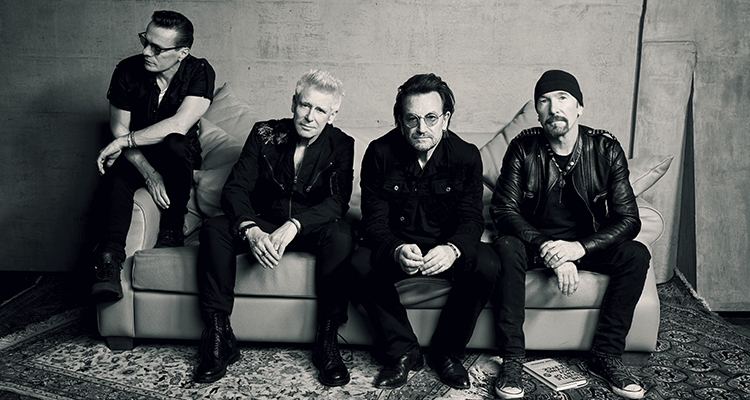
As the Dublin band reach half a century, a Northern Irish contemporary returns to the small-room circuit where he first heard the spark — and a guitar sound already set apart.
As U2 mark fifty years since forming in 1976, attention has turned to the small Irish rooms that first held them. Brendan Murphy of The 4 Of Us has recalled a tiny Newry gig from those early days on the live circuit — a night when his band outsold the Dublin group at the door and the shape of what was coming was already audible from the stage.Murphy, who formed The 4 Of Us with his brother Declan Murphy, described seeing the band's potential clearly in that setting. He spoke of admiring The Edge's guitar style even then — a way of playing that stood out on a bill still measured by local tickets rather than international tours. The memory sits squarely inside U2's formative stretch: not a commemorative invention but a working musician's account of craft spotted early, on the same circuit that trained so many Irish acts of the period.
U2, the Dublin band built around Bono and The Edge, began in 1976 and worked those Irish stages before the wider world took notice. Newry belongs to that map. Shared bills, modest capacities and word-of-mouth sales were the ordinary economy of the time. That The 4 Of Us could outsell U2 on the night is presented as a fact of the room, not a ranking for posterity. Rankings shifted week by week; what Murphy carries forward is the impression of a group already locking into something distinct.
A craftsman's memory of the early circuit
The 4 Of Us emerged from Northern Ireland and built their own following through records and steady live work, with the Murphy brothers at the centre of the songwriting and the stage. Brendan Murphy's recollection does not attempt a full history of either band. It fixes on a single evening and on what a fellow player heard: potential and a guitar approach worth studying. For readers who know both catalogues, the value is the cross-light — one Irish act measuring another at close range, before either name had settled into the fixed places they later occupied.
The anniversary supplies the peg. Fifty years on from their formation, U2's story is being told again through the lens of beginnings rather than a new album campaign or a fresh run of dates. No new tour has been announced with these recollections, and no release details have been attached to them. The frame is heritage: the formation year, the early live circuit, and a contemporary voice willing to say what the Newry room sounded like from the other side of the bill.
That restraint matters. Anniversary coverage can slide into recycled myth. A musician naming a guitar style he admired and noting that his own band sold more tickets that night keeps the focus on work and on the ordinary facts of a gig — capacity, draw, the sound of an instrument in a small space. It is the sort of detail that survives because someone who shared the circuit bothered to keep it.
Where the half-century leaves the story
U2's path from those rooms to the stages that later defined them is familiar to anyone who has lived with the records. What this anniversary moment adds is not a rewrite of that path but a footnote from Newry, delivered by Brendan Murphy as The 4 Of Us' own history runs alongside. Declan Murphy and the band remain part of the Northern Irish strand of the same wider story: acts who learned their trade across the island, on bills that mixed ambition with the simple need to fill a room.
For now the commemorative note stands without a product attached. Listeners who want the next chapter — new music, new dates — will have to wait for an announcement that has not come. What has come is a reminder that fifty years of U2 began in places like Newry, on nights when another Irish band could still outsell them and a guitarist who already sounded like nobody else on the bill.